
Hardwood, Laminate or Vinyl Plank: Flooring for Real Life
Which flooring fits your home, budget, moisture conditions and lifestyle in Oakville, ON
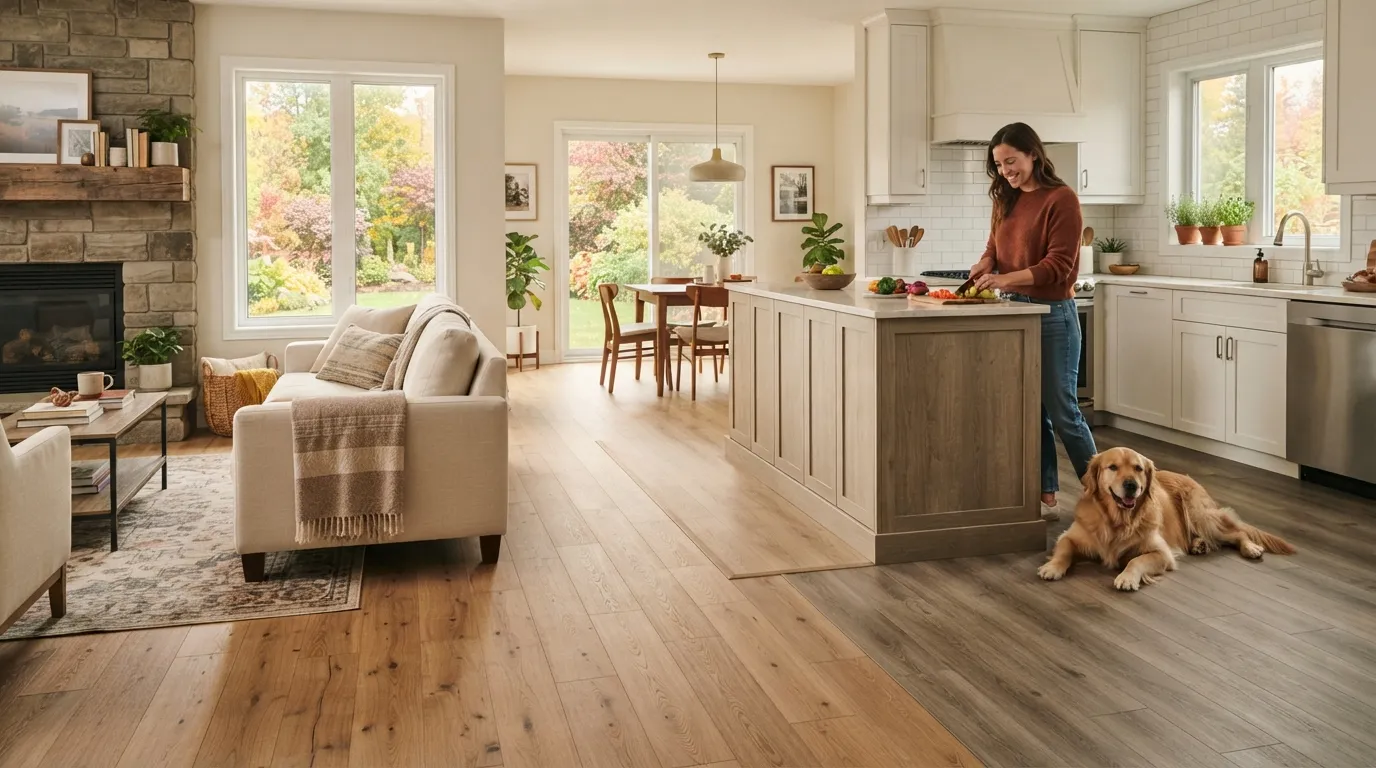
Which flooring is best for my home: hardwood, laminate or vinyl plank?
Choose based on moisture exposure, traffic level, desired lifespan and budget: engineered hardwood or solid hardwood for longevity and resale; laminate for economy in dry areas; luxury vinyl plank for moisture-prone rooms and active families.
Hardwood (solid & engineered)
Solid and engineered hardwood are natural wood. Solid hardwood is usually thicker and can be sanded and refinished multiple times; engineered hardwood uses a real-wood veneer over plywood layers to resist seasonal cupping and is often better in houses with variable humidity like those in Oakville and Halton Region.
Laminate
Laminate is a fiberboard core with a printed photographic layer and a protective topcoat. It mimics wood or tile appearance at a lower price but has limited ability to resist standing water and cannot be sanded—once worn or damaged, you replace the plank.
Luxury Vinyl Plank (LVP/LVT)
Vinyl plank is made from PVC (rigid or flexible cores). It’s highly water-resistant or waterproof, installs over many subfloors, and holds up well in basements, bathrooms, kitchens and homes with pets or kids. Quality ranges widely, so look at wear layers and construction.
Step-by-Step: Hardwood, Laminate or Vinyl Plank: Flooring for Real Life
A practical sequence to move from decision to finished floor. Adapt steps to your house’s condition and any local requirements in Oakville, Halton Region or nearby Burlington and Mississauga.
- 1
1. Evaluate rooms and priorities
List rooms by moisture risk (bathroom, mudroom, basement), traffic, and desired look. Decide which rooms need waterproof materials, which should prioritize refinishing ability (living rooms/hallways), and where budget constraints matter most.
- 2
2. Inspect subfloor and moisture
Check subfloor type (plywood, OSB, concrete) and measure moisture where applicable—concrete needs a moisture test, and crawlspaces should be inspected. If moisture is present, choose engineered hardwood or vinyl plank and plan for moisture mitigation or a suitable underlayment.
- 3
3. Select product specs and samples
Compare wear layers (vinyl: 12–20 mil typical for residential; hardwood: plank thickness and finish; laminate: AC rating and core density) and request full-size samples to see in your home’s light. Verify warranty terms and recommended installation methods from the manufacturer.
- 4
4. Get multiple written estimates
Ask local contractors for itemized quotes including materials, underlayment, removal/disposal, threshold work and any subfloor repair. Confirm installers have references, insurance, and are familiar with Ontario climate-related installation practices; verify permits only if structural or electrical work is involved.
- 5
5. Prepare the space and schedule
Remove furniture and plan for access. Ensure the house’s interior humidity is within manufacturer recommendations (often 30–50%) for at least 48 hours before and after installation—this is important in Oakville’s seasonal humidity shifts.
- 6
6. Final inspection and maintenance plan
Walk through with the installer noting gaps, transitions and finish quality. Record product codes, batch numbers and care instructions for future warranty claims and routine maintenance.
Mistakes to Avoid
Choosing or installing the wrong floor or skipping proper prep causes the majority of problems. The tips below highlight recurring homeowner errors in Oakville-area homes and practical ways to avoid them.
Ignoring moisture testing on concrete or basements
Concrete slabs can trap moisture; installing hardwood or laminate over damp concrete leads to cupping, swelling or adhesive failures. Perform a moisture test (calcium chloride or relative humidity probe) and, when in doubt, choose waterproof vinyl or an engineered product with a recommended moisture barrier.
Assuming all vinyl or laminate is waterproof
Not all products are equal—some laminate and lower-end vinyl are only water resistant, not fully waterproof. Read technical specs: waterproof LVP has a waterproof core and sealed seams, while many laminates will fail after prolonged exposure to standing water.
Skipping acclimation and humidity control
Wood and laminate expand and contract with humidity. Failing to acclimate planks in the home and ignoring recommended interior humidity ranges can produce gaps or buckling. Bring material into the house for the recommended period and maintain stable indoor humidity during installation.
Choosing contractors on price alone
A very low bid can hide poor prep, use of mismatched materials, or inexperienced installers. Verify references, see previous local jobs (preferably in Oakville or nearby Burlington/Mississauga), and ensure the quote lists specific materials and warranty-backed labor.
What Affects Your Outcome
Factors that change costs, longevity and satisfaction.
Climate and seasonal humidity
Oakville and Halton Region experience humid summers and cold winters; humidity swings affect wood movement and adhesive performance, so timing and HVAC control matter.
Subfloor condition
Uneven, soft or damp subfloors require repair or leveling; skipping this shortens floor life and voids many warranties.
Product quality and specs
Wear-layer thickness, core construction, and finish chemistry determine durability—higher-spec products cost more but last longer in busy homes.
Installer skill and methods
Correct acclimation, expansion gaps, adhesive choices and transition detailing rely on installer competence and affect long-term performance.
Household use and pets
High-traffic homes, active children, and pets need tougher surfaces (thicker wear layers, harder species, or waterproof vinyl) to avoid visible wear quickly.
Local code, permits and insurance considerations
Permit needs are rare for flooring alone, but any structural alterations or changes to stairs may require permits; insurance claims for water damage follow insurer rules—confirm specifics with your insurer and local building department.
Frequently Asked Questions
Can I install hardwood over radiant-floor heating?
Engineered hardwood is commonly used over hydronic radiant systems because its layered construction tolerates slight movement better than solid wood. Manufacturers have specific temperature and installation guidelines—verify compatibility and follow their maximum floor-surface temperature limits.
How long should new flooring acclimate in my house?
Acclimation periods vary by product—engineered hardwood often needs 48–72 hours, while some solids may need longer. Always follow the manufacturer's instructions and keep HVAC running so the material stabilizes to your home's normal humidity and temperature.
Is vinyl plank safe for basements in Oakville?
Yes—waterproof luxury vinyl plank is a practical basement choice because it tolerates moisture and temperature swings better than wood-based products. Still, address any active leaks or high humidity before installation to avoid mold or subfloor damage.
How do I choose between refinishing hardwood and replacing with vinyl?
If the hardwood is thick enough to sand (typically solid or thick engineered) and the foundation of the boards is sound, refinishing can restore it and preserve resale value. If boards are thin, excessively damaged, or you need waterproofing, replacement with vinyl may be the better long-term solution.
What underlayment do I need for laminate or vinyl?
Underlayment depends on product and subfloor—laminate typically uses foam or cork underlay for sound and minor leveling; vinyl sometimes installs directly or uses a thin, dense underlayment for comfort and noise reduction. Check manufacturer guidance for moisture barriers, especially over concrete.
Do local permits or inspections apply to flooring work in Oakville?
For routine flooring replacement you usually don't need a building permit in Oakville, but structural changes, stair alterations or adding electrical work might. Always verify with Oakville's building department and confirm insurer requirements if the work relates to a claim.
Schedule a free in-home flooring assessment
We’ll inspect subfloors, moisture conditions and product fit for your Oakville home and provide a written recommendation.
Get a Free Quote